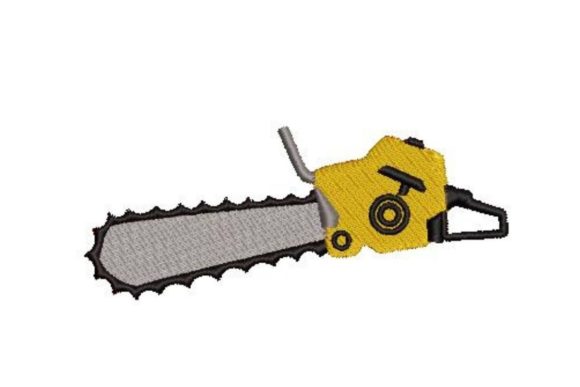
Chainsaw Embroidery Design Review
First Impression: Rustic Charm with a Wink
As an embroidery designer who’s prepped over 200 craft fair booths—from rural farmers’ markets to urban maker fairs—I’ll say it straight: Chainsaw lands with unexpected warmth. It’s not aggressive or industrial—it’s cute, countryside-chic, and quietly confident. The title alone sparks curiosity (and a smile), while the description—“just sew it on your work equipment, your jacket, even on your jeans”—tells me this was built for real life, not just display. It leans into Farm authenticity without leaning too hard: no forced slogans, no cartoonish exaggeration. Just honest, wearable charm.
Where Chainsaw Shines in Your Craft Fair Lineup
In my booth setup—featuring embroidered tote bags, aprons, tea towels, patches, caps, fabric pouches, pillow covers, and market bags—Chainsaw performs strongest where utility meets personality:
- Tote bag design: Centered on a natural canvas or oat-colored linen, it reads instantly at 6–8 feet—bold enough to catch eyes but soft enough to feel handmade, not mass-produced.
- Apron embroidery: Placed just above the pocket or subtly on the bib, it adds quiet wit to farmhouse-style kitchen wear—especially popular with Etsy sellers marketing “cottagecore cooking” bundles.
- Embroidered patch: This is where Chainsaw becomes highly repeatable. Iron-on or sew-on patches let customers personalize jackets, denim vests, or market bags—ideal for small shop product variety without redesigning layouts.
- Tea towel embroidery: Works beautifully on medium-weight cotton or linen blends—but avoid overly textured or looped terry. Keep stitching tight and balanced; dense areas must breathe on absorbent fabric.
- Caps and curved surfaces: Test carefully. The shape of a chainsaw lends itself well to front-panel cap placement, but curves compress fine lines. Use a low-profile stabilizer and reduce top tension slightly for clean coverage.
What Buyers Notice First (and Why It Sells)
At a craft fair, attention lasts 3 seconds. Chainsaw wins that window because it’s immediately legible, emotionally resonant, and contextually smart. Customers don’t pause to decode—it reads as “farm life,” “handmade pride,” or “lighthearted utility.” That emotional shorthand boosts perceived value: a $28 embroidered tote feels more intentional, more story-driven, when it features Chainsaw instead of generic florals.
It also strengthens brand consistency across mixed-product displays. Pair it with matching tea towel + apron + patch sets, and you’ve got cohesive Embroidery storytelling—no logo needed. For Etsy sellers, that cohesion translates directly into higher cart conversion and repeat buyer trust.
Production Realities: What Works—and What Needs Care
This isn’t a “set-and-forget” machine embroidery design. As someone who’s stitched out hundreds of digital embroidery files, I recommend these practical checks before batch production:
- Test on scrap fabric first—especially if using dark denim, thick twill, or textured tea towels. Contrast matters: light thread on black fabric may vanish unless stitch density supports visibility.
- Review spacing and tiny details. Does the chain link or handle curve hold clarity at 3.5" wide? If lettering is included (not stated, but common in such titles), confirm it remains legible at 1.75" height—critical for cap fronts or small pouches.
- Confirm hoop size and stabilizer match. A design that fits a 4x4 hoop is far more versatile for small shop product runs than one demanding 6x10. Use cutaway stabilizer for stretchy knits, tear-away for stable wovens.
- Inspect stitch density. Overly dense fills on curved or thick fabrics can pucker or distort. If the file includes heavy satin borders or layered fills, consider simplifying for faster turnarounds and cleaner results.
- Create at least one real mockup—not just a printable mockup. See how it drapes on a tote, how light hits the thread on an apron, how it photographs under fair lighting. Real-world context reveals what software previews miss.
Design Assets & Commercial Use Notes
Before listing Chainsaw as a digital embroidery file or selling finished products, verify licensing terms. The description says it “will stitch out lovely on any type of fabric”—a strong signal of versatility—but does not state commercial rights. Etsy sellers and boutique makers must confirm whether this is a commercial embroidery file before producing for resale. Never assume.
Also compare thread colors across fabric bases: navy thread on olive canvas reads earthy; the same thread on cream linen reads vintage. Small shop product success hinges on those subtle harmonies—not just technical accuracy.
Final Verdict: A Standout Craft Fair Product With Room to Grow
Chainsaw is more than a novelty—it’s a thoughtful Farm-aligned design with broad appeal across handmade markets. It balances whimsy and utility, scales gracefully from tiny patch to bold tote bag design, and photographs exceptionally well for online listings (especially flat-lay shots with rustic props). Its biggest strength? It invites conversation—“Oh, is that for your tractor?” “My dad would love this on his jacket!”—which means longer booth dwell time and stronger buyer engagement.
Yes, it demands attention to detail: test on your target fabrics, audit contrast and density, and always stitch a sample before committing to 50 aprons. But when executed well, Chainsaw doesn’t just fill space—it builds connection. And in a sea of samplers and scrollwork, that’s exactly what makes a craft fair product unforgettable.