Dripping Nail Polish Bottles
A Playful, Punchy Design That Demands Attention—But Not Every Fabric Will Agree
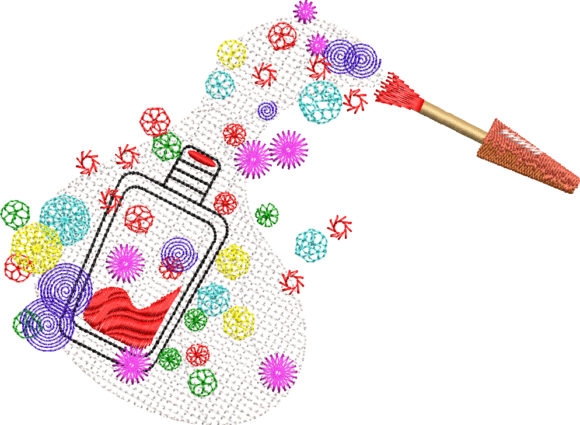
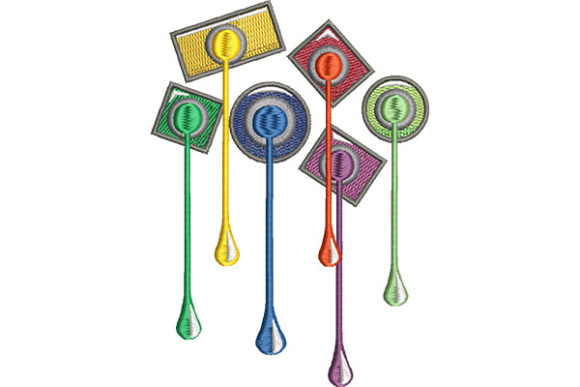
As someone who’s stitched hundreds of embroidery files onto everything from delicate baby onesies to heavy-duty denim aprons, my first impression of Dripping Nail Polish Bottles was immediate: it’s bold, unapologetically fun, and visually loud in the best possible way. The design captures that glossy, liquid-drip moment mid-pour—three stylized bottles tilted at playful angles, with thick, expressive “drips” cascading down one side. It doesn’t whisper; it winks, smirks, and leans in. That energy makes it perfect for fashion-forward handmade products—but only if you match its personality with the right context.
Where It Shines: Tote Bags, Sweatshirts, and Boutique Merchandise
I tested Dripping Nail Polish Bottles on a medium-weight cotton canvas tote for a local indie beauty brand’s pop-up shop. Stitched with high-sheen polyester thread and a light tear-away stabilizer, the satin stitch on the bottle caps popped beautifully, while the fill stitch in the drips held rich color depth without bleeding or pilling. Customers paused, smiled, and asked where they could buy one—proof that this isn’t just decoration, it’s conversation starter material.
It works especially well on custom apparel where personality matters: think oversized sweatshirts for nail techs, embroidered patches for salon uniforms, or pillow covers for a glam-themed nursery. As an embroidery file, it scales cleanly—no pixelation or distortion when resized between 3.5" and 5". I’ve also used it as a focal point on tea towels (paired with subtle running-stitch borders) and as a standalone motif on the back yoke of a cropped denim jacket. In every case, it elevated the handmade product from “cute” to “curated.”
Where It Needs Thought: Texture, Scale, and Real-World Wear
This isn’t a “set-and-forget” design. Its charm lives in contrast and clarity—and those can vanish fast on tricky substrates. On terry cloth towels or heavily textured linen, the fine drip lines blurred slightly, losing definition. On stretchy jersey fabric (like a soft baby bodysuit), even with cutaway stabilizer, the tension pulled the drips into subtle ovals—still recognizable, but less intentional. And on dark fabrics? Absolutely stunning—if your thread colors are saturated enough. A pale pink drip on navy needs careful thread selection; otherwise, it reads as greyish mist instead of glossy lacquer.
Small hoop sizes (<4") require trimming: the original layout fits comfortably in a 5x7 hoop, but compressing it further risks crowding the drips and flattening their dimensionality. Also, avoid placing it near seams, curved surfaces like cap fronts, or layered garments (e.g., hoodies with thick lining)—the dense stitch areas need room to lie flat and breathe.
What It Says About Your Brand—Before a Single Stitch
Dripping Nail Polish Bottles signals confidence, creativity, and a wink toward self-expression. When used thoughtfully, it boosts perceived value—not because it’s complex, but because it feels *designed*, not downloaded. Etsy sellers told me customers specifically searched for “nail art embroidery” after seeing it on a mockup; one boutique owner reported her best-selling sweatshirt variant featured this exact machine embroidery design centered on the chest. That kind of buyer engagement doesn’t happen with generic florals.
But here’s the quiet truth: if stitched poorly—on thin fabric without proper stabilizer, or with mismatched thread contrast—it can look amateurish, even sloppy. Embroidery is tactile, and customers feel the difference. A crisp, well-balanced finished product builds trust. A muddy, puckered version undercuts your craft business before the first sale.
Practical Designer Notes You’ll Actually Use
- Always test on scrap fabric first—especially if using textured, dark, or stretchy materials. Check how the drips hold shape after washing and drying.
- Review stitch density before stitching on lightweight fabrics. High-density fills may stiffen delicate items like baby onesies—consider simplifying or opting for lighter fill patterns if your software allows.
- Confirm hoop size compatibility with your machine. This design spreads width-wise; a narrow 4x4 hoop won’t capture the full composition without repositioning.
- Inspect small details at 200% zoom in your embroidery software: check for stray jump stitches near bottle necks and ensure no tiny loops hide in the drip curves.
- Test black-and-white mockups to gauge contrast and silhouette strength—this design relies on shape recognition as much as color.
- Use proper stabilizer: light cutaway for knits, tear-away for stable wovens, and optional topping for fuzzy fabrics like fleece.
- Verify licensing before selling finished items or digital products. Since this is a commercial embroidery asset, confirm whether resale of stitched goods or redistribution of the digital embroidery file is permitted.
Final Take: A Vibrant Asset—If You Respect Its Rhythm
Dripping Nail Polish Bottles isn’t background noise. It’s a statement piece dressed in polish and personality. It belongs on products meant to be seen, shared, and styled—not hidden in corners or buried under layers. For Etsy sellers, small shop products, and craft business owners building a recognizable visual language, it’s a smart addition to your design assets. Just remember: great embroidery isn’t about slapping a file onto fabric. It’s about matching intention with execution—and this design rewards that care.
Whether you’re prepping a batch of personalized gifts, designing holiday embroidery for a client, or building a cohesive line of boutique branding, let Dripping Nail Polish Bottles do the talking—but only after you’ve listened closely to how it stitches, wears, and resonates in real life.