Prince Charming: A Thoughtful Embroidery Review
First Impressions: Sweet, Simple, and Slightly Timeless
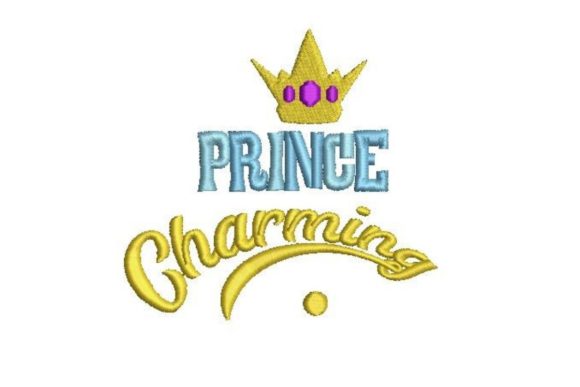
When I opened Prince Charming for the first time, I didn’t see a “fairy tale” cliché—I saw a design with quiet intention. It’s soft in silhouette, balanced in proportion, and clearly built for charm over complexity. There’s no excessive detail or fussy line work—just clean outlines, gentle curves, and a friendly, approachable face that reads well even at 3–4 inches tall. That’s critical if you’re stitching it onto baby onesies or nursery pillows where subtlety wins over spectacle.
Where Prince Charming Truly Shines
I recently used Prince Charming on a set of organic cotton baby pillow covers for a boutique client—and it landed perfectly. The design scaled down without losing legibility, held its shape across seams, and gave the finished product that handmade warmth customers pay for. It works especially well on:
- Baby embroidery: Onesies, burp cloths, and crib sheets—its gentle scale and rounded forms feel safe and nurturing.
- Nursery decor: Stitched onto muslin wall hangings or linen napkins, it adds thematic cohesion without overwhelming the space.
- Custom apparel: On lightweight sweatshirts or crewneck tees, it reads as intentional—not cartoonish—especially when paired with minimalist fonts or monogrammed initials.
- Tote bag design: Centered on a natural canvas tote, it becomes a quiet signature piece—ideal for small shop products or craft fair merchandise.
- Holiday embroidery: Think Christmas stockings or Easter basket liners—Prince Charming fits seasonal gifting without feeling dated or overly themed.
Real-World Considerations Before You Stitch
This isn’t a “drop-and-stitch” file—you’ll want to pause before committing to your final fabric. Here’s what I watched for:
- Fabric texture matters: On terry cloth bath towels, I added medium-cutaway stabilizer beneath and a light tear-away on top. Without it, the satin stitch edges softened too much and lost definition.
- Dark fabric? Test contrast: I ran a black-on-navy version and found the inner details (like the crown outline) faded unless I switched to metallic gold thread or added a white underlay. Always check thread colors against your base fabric in natural light.
- Stretchy or thin fabric?: Avoid using Prince Charming directly on ribbed knit onesies or lightweight voile without proper stabilization—it’s not dense enough to anchor itself on unstable surfaces.
- Curved surfaces like caps: The shape is too wide and flat for most front-panel cap hoops. Save it for back-strap embroidery or flat panels only.
- Wash durability: Because it relies on satin and fill stitch rather than heavy applique, I recommend reinforcing high-friction zones (like pillow corners) with a second pass or denser underlay—if this will be a frequently laundered handmade product.
What It Adds—Beyond Just Looks
Prince Charming doesn’t shout. It invites. That makes it unusually effective for brand consistency—especially if you run a craft business centered on gentle, storybook-inspired design assets. Etsy sellers tell me buyers respond strongly to its “calm confidence”: it feels personal but not precious, playful but not childish. When stitched cleanly, it elevates a basic tea towel into a personalized gift. On a linen apron, it suggests care and narrative—not just function. And because it avoids trend-heavy elements (no glitter effects, no exaggerated proportions), it stays relevant across seasons and customer age groups.
Design Notes Every Embroidery Designer Should Check
Before adding Prince Charming to your digital embroidery file library—or listing it in an Etsy shop—do these five things:
- Test on scrap fabric that matches your intended project: same weight, weave, and stretch. Don’t assume it behaves the same on cotton poplin and bamboo jersey.
- Review stitch density visually—not just numerically. Zoom in on the crown and facial features. Are they filled evenly? Any areas where stitches bunch or leave gaps?
- Confirm hoop size compatibility. If you plan to use it on small-batch patches or embroidered labels, verify whether the smallest version fits comfortably in a 4x4 hoop with seam allowance.
- Inspect small details in black-and-white mockups. What reads clearly in color might disappear on dark backgrounds—especially fine lines or subtle shading.
- Verify licensing. Since this is marketed as a machine embroidery design for commercial use, double-check whether resale of finished items (like embroidered baby blankets) is permitted—and whether attribution or license renewal applies.
A Final Thought for Creative Entrepreneurs
If you're building a collection of Fairy Tales-themed embroidery files, Prince Charming is a strong anchor—not because it’s flashy, but because it’s versatile, emotionally resonant, and commercially sound. It pairs well with companion designs (a matching “Princess” or “Castle” motif), supports cohesive printable mockups, and translates cleanly into both digital product previews and physical finished product photography. For small shop owners and handmade product sellers, that kind of reliability is rare—and valuable.
Bottom Line: Who Should Use Prince Charming?
Choose Prince Charming if you value clarity over clutter, storytelling over saturation, and thoughtful execution over speed. It’s ideal for:
- Etsy sellers crafting personalized baby gifts
- Apparel decorators building a boutique embroidery brand
- Craft business owners developing seasonal design assets
- Hobbyists making heirloom-quality nursery decor
- Digital product sellers curating a cohesive Fairy Tales collection
It’s not the flashiest embroidery file in your folder—but it may be the one your customers remember longest.